syn. Artemisia lloydii
syn. Artemisia lloydii
Perennial of the Asteraceae family, this subspecies is confined to the Atlantic coasts of Western Europe, from the Breton and Norman coasts to the shores of the North Sea. It colonizes stabilized maritime sands, stabilized grey dunes, and short coastal grasslands, always in full exposure and in direct contact with marine influence.
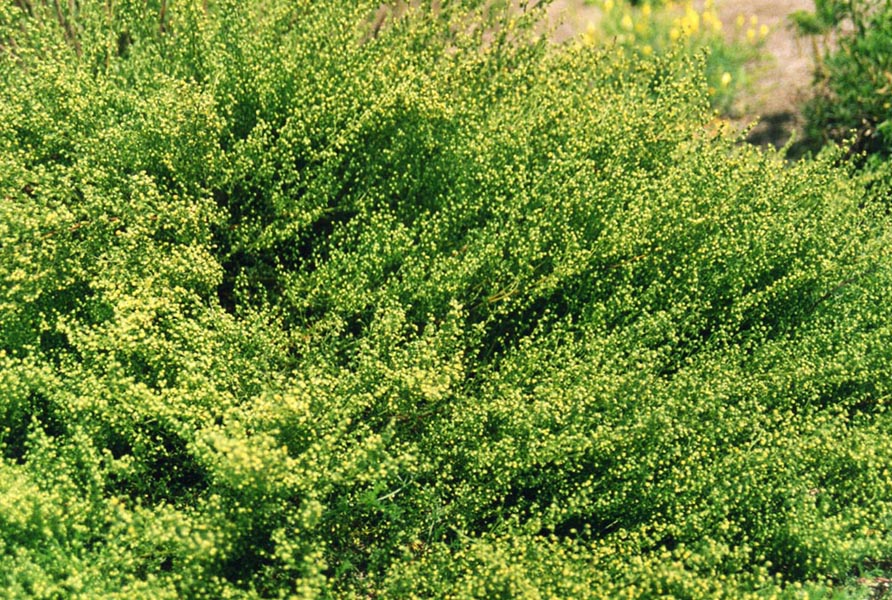
It forms a sprawling, vigorous and invasive bush, reaching 40 to 60 cm in height and quickly covering large areas. The woody stems at the base branch abundantly and bear finely cut foliage in linear segments of a bright and luminous green. At flowering time, the countless yellow-green flower heads invade the entire plant, giving it a mossy and almost luminescent appearance. In its natural habitat, its flowering extends from August to October.
In cultivation, its vigor is such that it can become difficult to contain: a spacious location suits it better than a small rock garden. It requires a sandy, very well-drained, poor soil, in full exposure, and perfectly tolerates sea spray and summer drought.